A south-facing garden in Eure cannot be planted like a shaded plot at the bottom of a valley. Before choosing a single perennial or shrub, take a close look at the soil, the exposure and, above all, water availability. Creating a harmonious garden that looks good in every season starts with accepting that the land sets the rules—not the garden centre catalogue.
Soil and water: the two factors that make the decisions for you
On clay soil, water tends to stagnate in winter and become scarce in summer as the ground cracks. On sandy soil, it drains away quickly, leaving shallow roots to suffer. Before planting anything, dig a hole about forty centimetres deep and take a look at the colour and texture, and whether there are stones or compacted clay.
This simple assessment will guide your choice of plants far more reliably than a preference for a particular colour. A dogwood or hydrangea planted in dry, chalky soil will struggle for years, while a rockrose or lavender will thrive there without watering.
During droughts, water restrictions may apply to lawns and ornamental gardens, with alert levels varying by area. Designing a garden that stays beautiful without regular watering is no longer a luxury—it’s a sensible precaution. For example, you could replace part of the lawn with an evergreen ground cover such as creeping thyme or Achillea crithmifolia, which can withstand heat and still look neat in the height of summer.
To create a welcoming garden that lasts, save time by starting with what the soil can support rather than trying to correct its shortcomings with generous amounts of soil amendments.
Evergreen foliage and decorative bark for a garden with winter structure
Most competitors talk about “plant diversity” without explaining what actually keeps a garden looking good from November to March. The answer is simple: evergreen foliage provides structure while everything else is dormant.
Conifers often come to mind, but there’s a much wider range to choose from. Osmanthus, Elaeagnus and Choisya bring green volume to the garden in the depths of winter, along with fragrant flowers during quieter periods of the year. Elaeagnus × ebbingei flowers discreetly in autumn, releasing a sweet scent you might not expect.
Make the most of bark and shape
Once the deciduous foliage has fallen, trunks and branches take over as the garden’s visual highlights. A birch with white bark, a dogwood with vivid red stems or a contorted willow create a striking display that looks even more spectacular in snow or frost.
Plant these trees and shrubs where they can be seen from the house, perhaps from a kitchen window or through a picture window. A winter garden is as much for looking at as it is for walking through.
- Cornus sanguinea ‘Midwinter Fire’: orange and red stems; cut back in March to renew the colours each year
- Betula utilis var. jacquemontii: brilliant white bark; thrives in moist soil and open locations
- Nandina domestica: evergreen foliage that turns red in winter; compact and suitable for small spaces
Staggered flowering from spring to autumn: a practical calendar
Rather than listing dozens of species, plan by flowering month and plant layer (low, medium and tall). The aim is to ensure that at least two sources of colour brighten the garden every month.
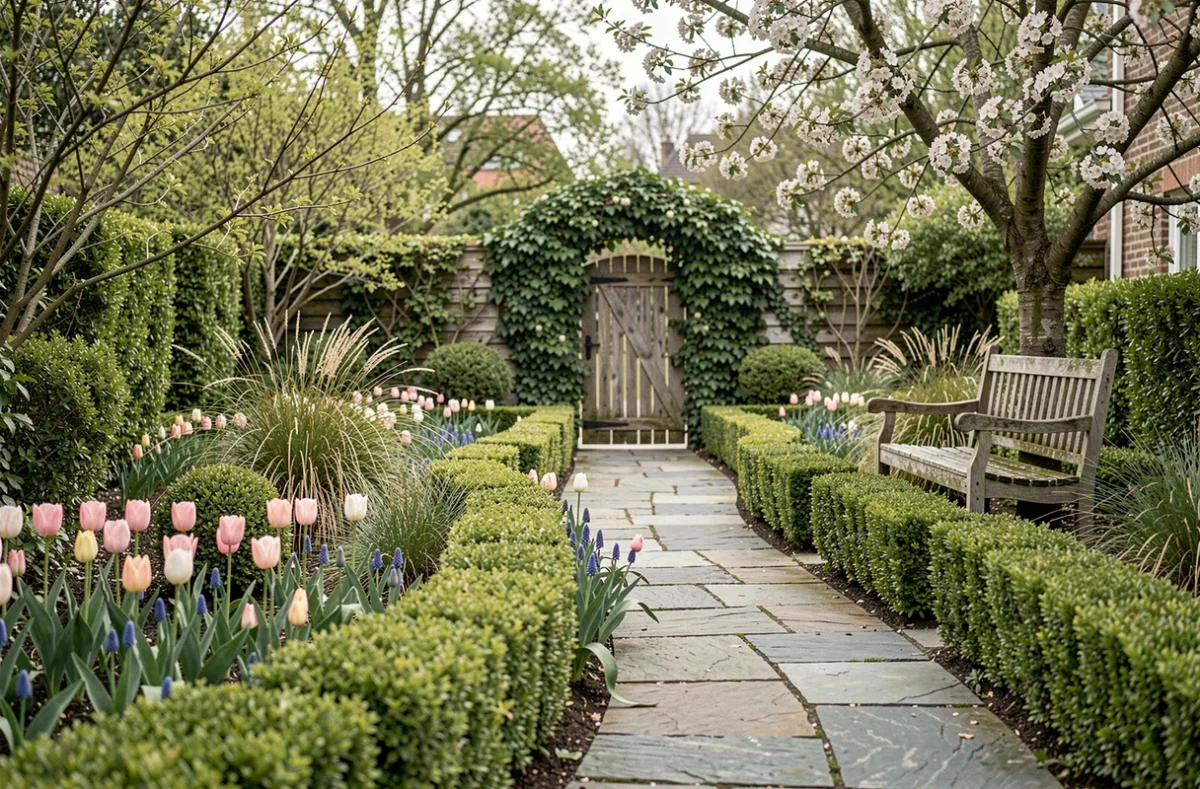
From March to May, bulbs such as crocuses, daffodils and species tulips take over from hellebores, which start flowering as early as January. Plant them in informal groups beneath deciduous shrubs, where they can catch the light before the leaves emerge.
Summer colour and late-season interest
From June to August, perennials take centre stage: salvias, gaura, yarrow and coneflowers. Choose varieties that can tolerate heat and need little water once established. Ornamental grasses such as Miscanthus and Stipa come into their own from July and keep their golden plumes until February if left uncut.
In September and October, asters, Japanese anemones and sedums extend the season. Uncut grasses provide a transition into winter, helping you avoid the “shorn” look that can take over a garden as early as November.

Put green waste to use instead of throwing it away
Fallen leaves and prunings are a valuable resource for the soil, but one that is too often overlooked.
Shredded leaves make effective mulch for garden beds. They protect the soil from frost, reduce evaporation in summer and feed microbial life as they decompose. Chipped hedge trimmings produce ramial chipped wood (RCW), which gradually enriches the soil with humus.
A garden that recycles its own waste needs less maintenance and improves its soil year after year. Set up a compost bin in a discreet corner and chip branches as you prune throughout the seasons.
Thoughtful maintenance: adapt your gardening tasks to each season
A garden designed with the right plants in the right places needs less attention than you might think. A common mistake is to plant too closely for an instant effect, then spend all your time pruning and keeping plants in check.
- Spring: clear away ornamental grasses (cut them back before new growth starts), divide overcrowded perennials and mulch garden beds
- Summer: water only new plantings, and remove spent flowers to extend the flowering season
- Autumn: plant bulbs and shrubs (the ideal time for root establishment), and shred leaves for mulch
- Winter: prune summer-flowering shrubs, check stakes and protect borderline-hardy plants from frost
When choosing plants, it’s also important to consider their resilience to future climate stresses. ADEME’s AVEC programme offers a framework that takes into account plants’ cooling potential and their suitability for future conditions—useful guidance before finalising a planting list.
A harmonious garden that looks good in every season doesn’t depend on an abundance of showy plants. It comes down to a few well-considered choices: evergreens for winter structure, flowers that take turns blooming throughout the year, and soil nourished by the garden’s own organic matter. The rest is up to the land.