
A nostril piercing that migrates toward the surface presents a diagnostic challenge before you even consider repiercing. Confusing rejection with chronic irritation or an early infection can lead to premature decisions, such as removing the jewelry or trying to reopen the channel. Distinguishing between these three situations radically changes the recommended course of action and the waiting period before a possible new piercing.
Differential diagnosis: piercing rejection, irritation, or infection
Jewelry that appears to be moving toward the surface does not automatically mean rejection. Persistent irritation can mimic the signs of rejection without the jewelry actually migrating through the tissue. Repeated friction (from a mask or glasses, or from aggressive cleaning) can cause skin thickening and redness around the piercing, which many people mistake for the start of rejection.
True rejection is characterized by a gradual, measurable thinning of the tissue between the jewelry and the surface. The bar or ring becomes visible beneath the skin, and the channel shortens. This process can take several weeks, sometimes several months.
An infection, on the other hand, causes pronounced local warmth, worsening swelling, and pus-like discharge, sometimes accompanied by a fever. The NHS advises against removing jewelry yourself if you suspect an infection, unless a medical professional tells you to, because removal can cause the channel to close and trap the infection beneath the skin.
- Visible migration of the jewelry toward the surface, with thinning tissue between the two openings: likely rejection.
- Redness, recurring crusts, or a keloid-like bump without jewelry displacement: more likely mechanical irritation or a reaction to the material.
- Increasing pain, warmth, pus, fever, or general malaise: consult a doctor before handling the jewelry.
When the clinical picture is unclear, an experienced piercer is a good first point of contact. They can visually assess how much of the channel remains and the condition of the tissue. If an infection is suspected, they will refer you to a doctor. Nose piercing rejection is not managed in the same way as an infection, and confusing the two can lead to complications or a repiercing that is doomed to fail.
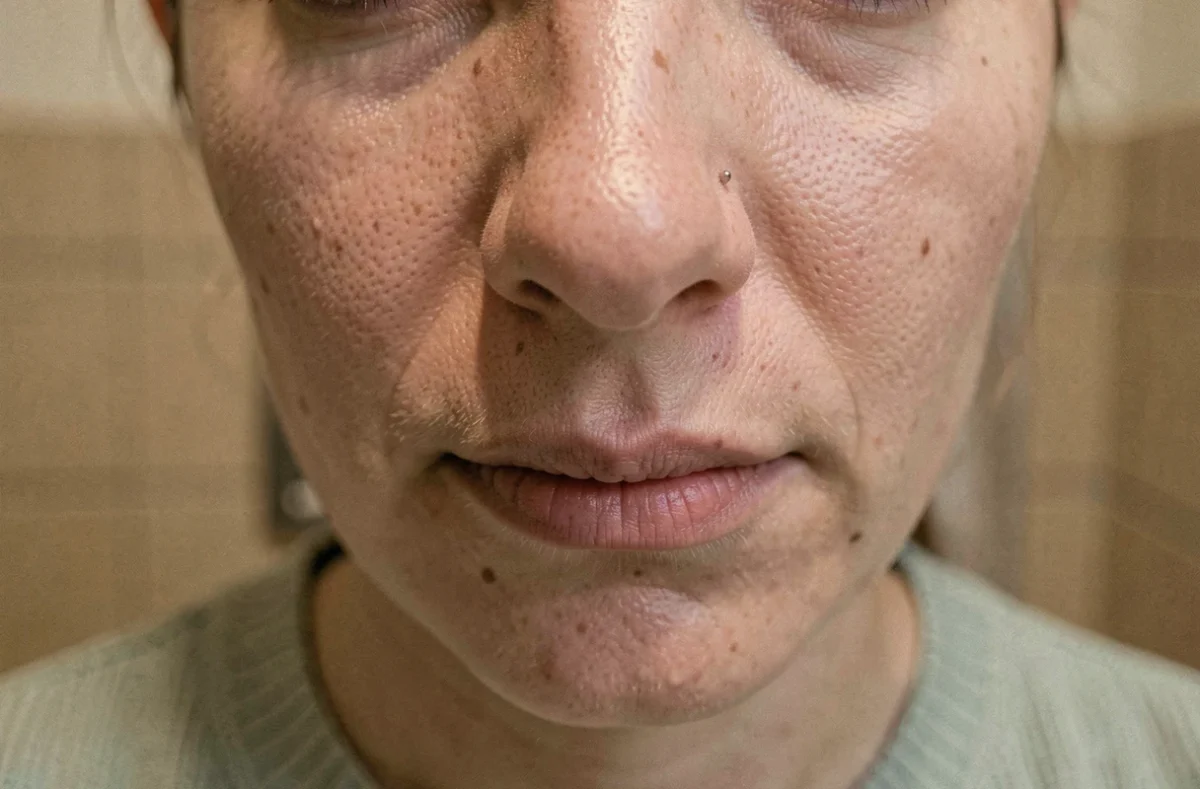
Repiercing your nose after rejection: the timeline isn’t written on your skin
A hole that looks closed on the surface tells you nothing about the condition of the underlying tissue. The skin can close quickly, sometimes within a few days, but the internal scar tissue remains fragile for much longer. The disappearance of pain does not mean the area has fully healed.
An initial nostril piercing can take several months to heal completely. After rejection, the tissue has undergone additional stress from migration and prolonged inflammation, and sometimes a secondary infection. The time to wait before repiercing therefore depends on the actual condition of the area, not a fixed schedule.
Why a piercer should assess the area before repiercing
The presence of fibrous scar tissue changes the situation. Dense scar tissue does not respond like healthy cartilage: it has a poorer blood supply, is less flexible, and is more likely to reject again. Before confirming that repiercing is feasible, a professional will assess the texture, thickness, and elasticity of the remaining skin.
The new piercing does not have to follow the old channel. The location of the scar may require a slightly different angle or an entry point shifted by a few millimeters. In some cases, the piercer may advise against repiercing if the tissue is not in good enough condition to hold the jewelry securely.
Forcing jewelry into a narrowed or partially closed channel is a common mistake. If the post meets resistance or causes pain or bleeding, stop immediately. You cannot reliably tell with the naked eye whether a channel is simply narrowed or has closed completely.
Choosing jewelry and materials to prevent a second rejection
The material of the original jewelry may have contributed to the rejection without you realizing it. Despite its reassuring name, surgical steel contains nickel, a common contact allergen. Choosing a nickel-free material significantly reduces the risk of a tissue reaction when repiercing.
Jewelry gauge matters just as much as the material. Jewelry that is too thin exerts greater linear pressure on the tissue, encouraging migration. A diameter suited to the thickness of the nostril wing distributes the force more evenly.
What to confirm with your piercer before getting repierced
- Nickel-free material: choose implant-grade titanium, niobium, or solid gold. Avoid stainless steel and gold-plated jewelry.
- Initial jewelry type: a flat-back labret moves less than a ring in a freshly pierced nostril, reducing mechanical irritation during healing.
- Piercing depth: there should be enough tissue between the two ends of the channel to prevent tension on the jewelry. The piercer will check this thickness before confirming that repiercing is feasible.
- Aftercare routine: use saline solution, avoid harsh antiseptics (Betadine, alcohol), and do not handle the jewelry unnecessarily during the initial inflammatory phase.
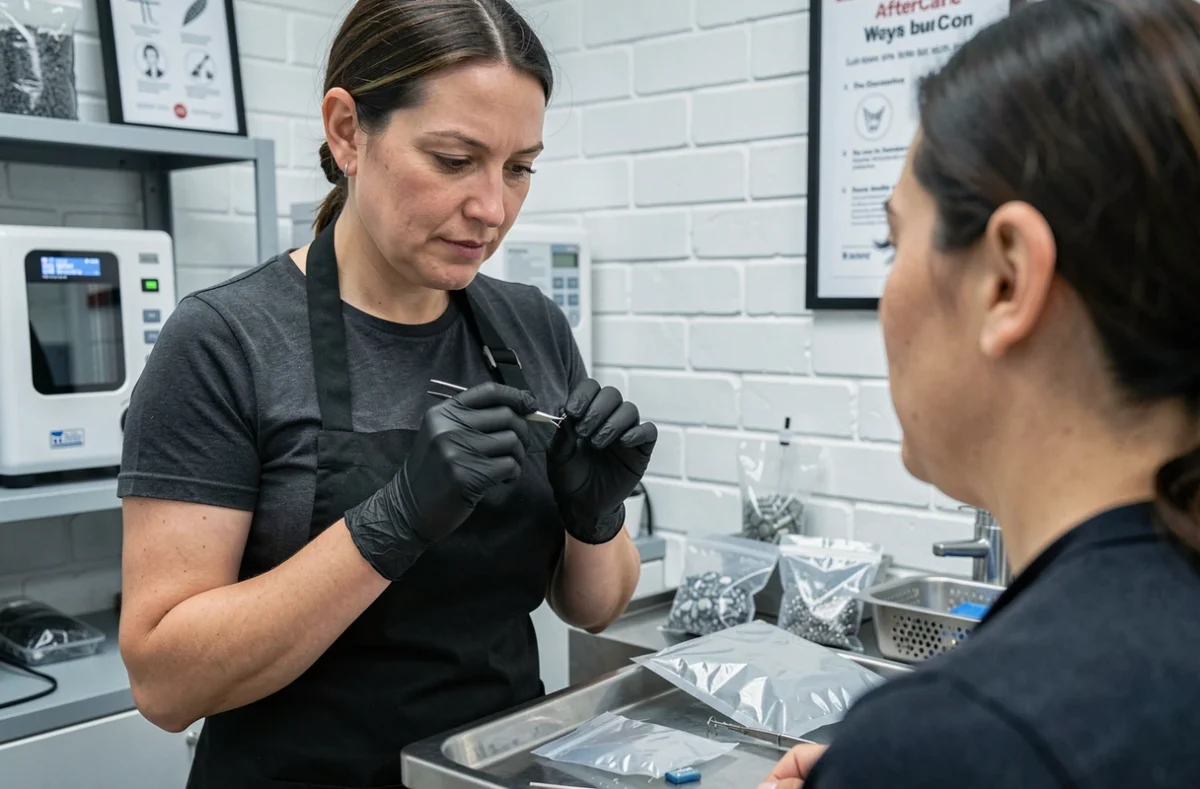
Factors that increase the risk of recurrent nostril piercing rejection
A single rejection does not permanently rule out piercing the area again. However, some people are more prone to recurrence, and recognizing this can help prevent repeated piercing attempts. A history of rejection with other surface piercings may indicate an individual tendency.
Surface piercings (eyebrow, nape, microdermals) pass through the superficial layers of the dermis, where rejection is common. A nostril piercing passes through cartilage, which is more stable tissue, but the nostril wing is still thin. If the first piercing was rejected very quickly (within a few weeks), the likelihood of recurrence in the same spot increases.
Other factors can increase the risk: smoking (which slows local blood flow), documented skin allergies, and a tendency to develop hypertrophic or keloid scars. A competent piercer will ask about these factors before agreeing to repierce and may recommend seeing a dermatologist if your scarring history warrants it.
The decision to repierce after rejection rests on three verifiable factors: a clear diagnosis of the first episode, stabilized scar tissue assessed by a professional, and a revised plan covering the material, gauge, and placement. Without all three conditions in place, the risk of going through the same experience again remains high.