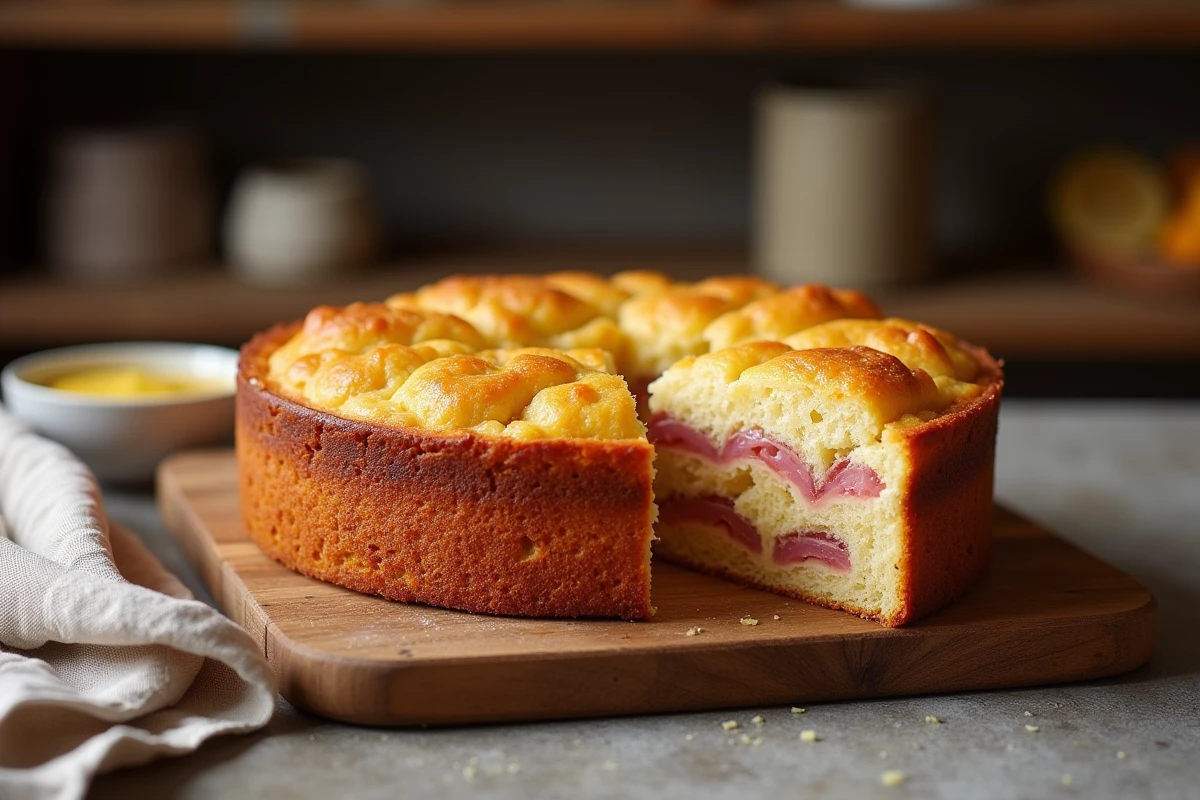
The bacon and cheese cake relies on a precise balance between fat, cheese proteins, and dough hydration. When the crumb is dry or compact, the issue rarely stems from ingredient proportions: it’s the treatment of gluten and moisture management during baking that makes the difference between a dense cake and a fluffy one.
Flour and starch in a savory cake: the ratio that changes the texture
Classic wheat flour (type 55) forms a gluten network as soon as it comes into contact with liquid and is worked. In a bacon cake, this network provides structure, but an excess makes the crumb elastic and tight.
Several pastry chefs have recommended for a few years now to replace one third of the flour with starch (corn or potato). Starch contains no gluten. By limiting the amount of active proteins in the dough, a lighter crumb is achieved without sacrificing structure. The cake rises well, retains its shape when unmolded, but remains tender to the bite.
For a cake recipe on Trop Facile, this principle of flour/starch mixing is applied with a result that is significantly lighter than a 100% flour base.
The other technical point: the mixing of dry and wet ingredients. The more you work the dough, the more gluten develops. Two or three turns of the spatula are sufficient after incorporating the flour. Mix just enough for the flour to disappear, not more.

Yogurt or fermented milk: the acidic hydration that keeps the cake moist
Grated cheese absorbs some of the moisture from the dough during baking. This adds flavor, but it can also dry out the cake if the initial hydration is insufficient.
Replacing all or part of the milk with plain yogurt, buttermilk, or kefir provides a solution to this problem. The acidity of these fermented dairy products reacts with baking powder and generates additional carbon dioxide, which aerates the crumb. At the same time, the proteins in yogurt retain water better than milk, keeping the cake moist even after cooling.
This technique is particularly suitable for cakes loaded with grated cheese and bacon, two fillings that capture moisture. A classic savory cake made with standard milk loses a lot of flexibility by the next day. With yogurt, the texture remains pleasant even when reheated.
Quantity and choice of dairy product
A whole plain yogurt (not low-fat) works better than a 0% yogurt: the fat contributes to the moistness. Buttermilk, slightly more liquid, is suitable if the batter seems too thick. The idea is to achieve a batter that flows slowly from the whisk, neither liquid nor compact.
Baking the bacon and cheese cake: adjusted temperature and duration
The usual reflex is to bake a savory cake at 180 °C. Feedback from cooking schools and recent educational materials suggests otherwise: a longer bake at a lower temperature (around 160-170 °C) better preserves moisture.
At 180 °C, the crust forms quickly and traps steam, but the inside continues to cook from residual heat after coming out of the oven. The result: a cake that seems perfect when unmolded but dries out as it cools.
At 160-170 °C, the heat penetrates more gradually. The cheese melts without burning, the bacon doesn’t release too much fat on the surface, and the crumb cooks evenly from the edge to the center.
Check the baking without opening the oven too soon
- Do not open the oven door during the first two-thirds of the baking time: the thermal shock causes the batter that hasn’t set yet to collapse.
- Insert the blade of a knife into the center of the cake: it should come out with a few moist crumbs, not raw batter or completely dry.
- Let the cake rest in its mold for about ten minutes before unmolding: the residual steam redistributes moisture in the crumb.
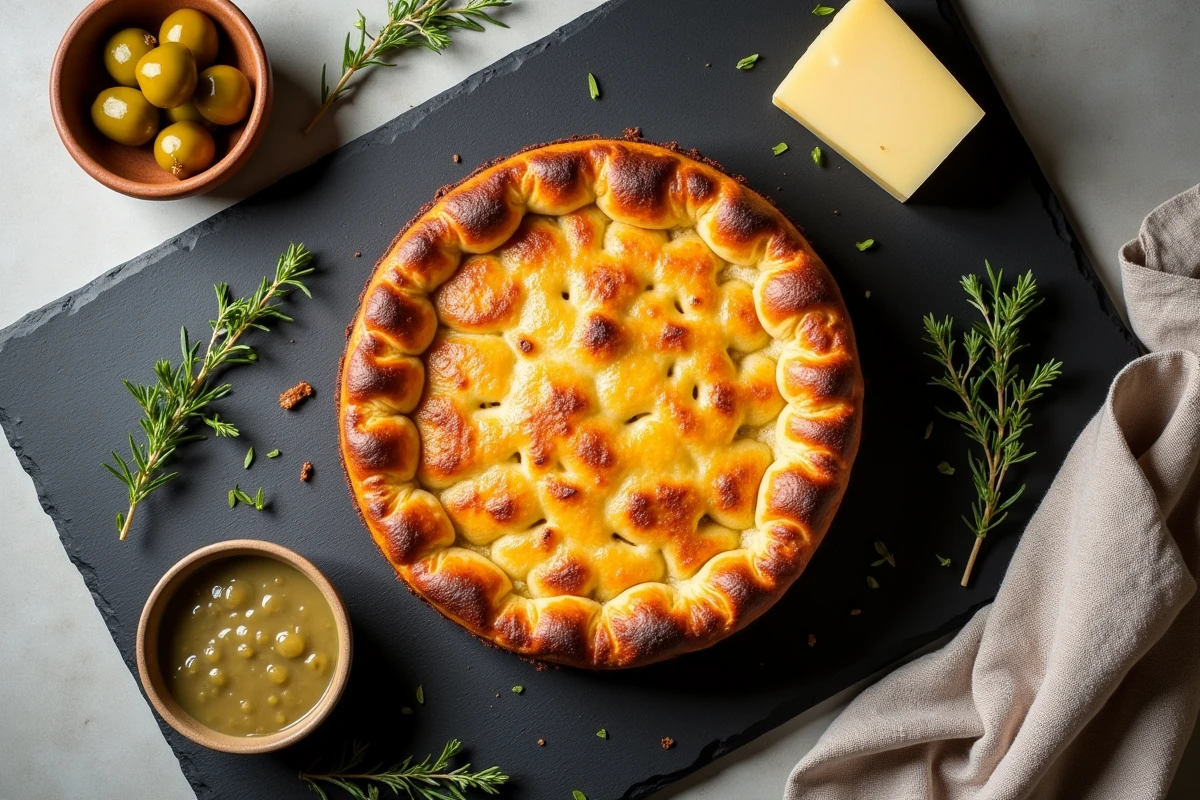
Preparing the bacon and cheese before incorporation
Incorporating raw bacon directly into the batter is a common mistake. As they cook, they release water and fat that create wet pockets in the crumb. Sautéing the bacon dry for a few minutes before adding it to the batter eliminates this excess liquid.
Draining the bacon on paper towels and letting it cool also prevents the butter or cheese from melting prematurely due to heat contact.
Grated cheese: size and distribution
Coarsely grated cheese melts into strands that weigh down certain areas of the cake. Finely grated cheese distributes more evenly in the batter and melts uniformly during baking.
Coating the bacon and grated cheese in a spoonful of flour before mixing them into the batter also prevents them from sinking to the bottom of the mold. The flour acts as a sticking agent that keeps them suspended in the crumb.
- Grate the cheese finely for an even distribution of flavor in each slice.
- Lightly flour the bacon and cheese before incorporating them into the batter.
- Add the filling last, after mixing the flour/liquid, folding gently with a spatula.
A well-executed bacon and cheese cake is recognized by its airy crumb that doesn’t crumble and a golden crust that isn’t hard. The flour/starch ratio, the choice of dairy product, and the mastery of baking temperature are the three technical variables to address. The rest is the resting time after baking that completes the work.