Interior decoration in 2024 is no longer just about choosing a palette or style. Purchasing decisions are shifting towards longevity, modularity, and resale value of furniture, in a furniture market that has been contracting since 2023. This repositioning changes the way each trend is interpreted: a material, finish, or layout is now judged as much on its lifecycle as on its visual appeal.
Reuse and regulation: what is changing for decorative furniture
The decree of February 21, 2024, clarified the public purchasing objectives stemming from reuse, repurposing, or recycling, including for furniture and interior design. This evolution structures the professional offering well beyond mere enthusiasm for vintage.
On the consumer side, the TRIMAN marking on furniture products has been in effect since December 15, 2022, and for textile decoration elements since August 25, 2023. Rugs, curtains, cushions: each piece now carries regulatory information about its end of life.
We observe that this traceability pushes manufacturers to rethink their ranges. A piece of furniture designed to be disassembled, repaired, or resold becomes more attractive compared to a disposable item dressed in trendy varnish. Before confirming a decorative purchase, checking for the TRIMAN logo and the manufacturer’s take-back policy becomes a professional reflex as well as a common-sense gesture.
To follow decor trends on Design en Ville, this regulatory dimension is an integral part of the analysis of the collections offered each season.
Raw materials and textured finishes: balancing appearance and durability
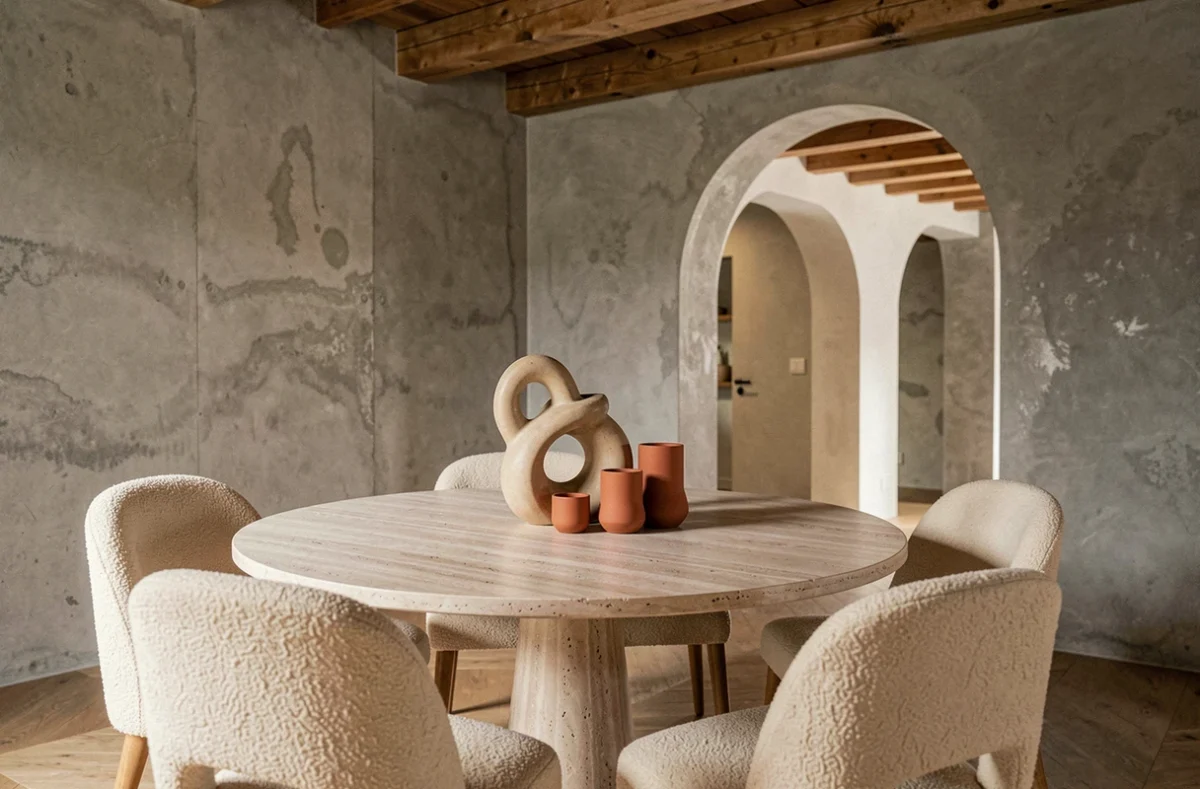
Solid wood, rattan, natural stone, and textiles like linen dominate interiors in 2024. Their appeal lies not only in their organic aesthetics: these materials age better than their synthetic counterparts and retain a significantly higher resale value in the second-hand market.
Selection criteria for a functional investment
Choosing a piece as a functional investment rather than as a disposable decorative object requires evaluating a few concrete parameters:
- The origin of the wood and its surface treatment: an oiled oak tabletop can be sanded and renovated, whereas laminate cannot
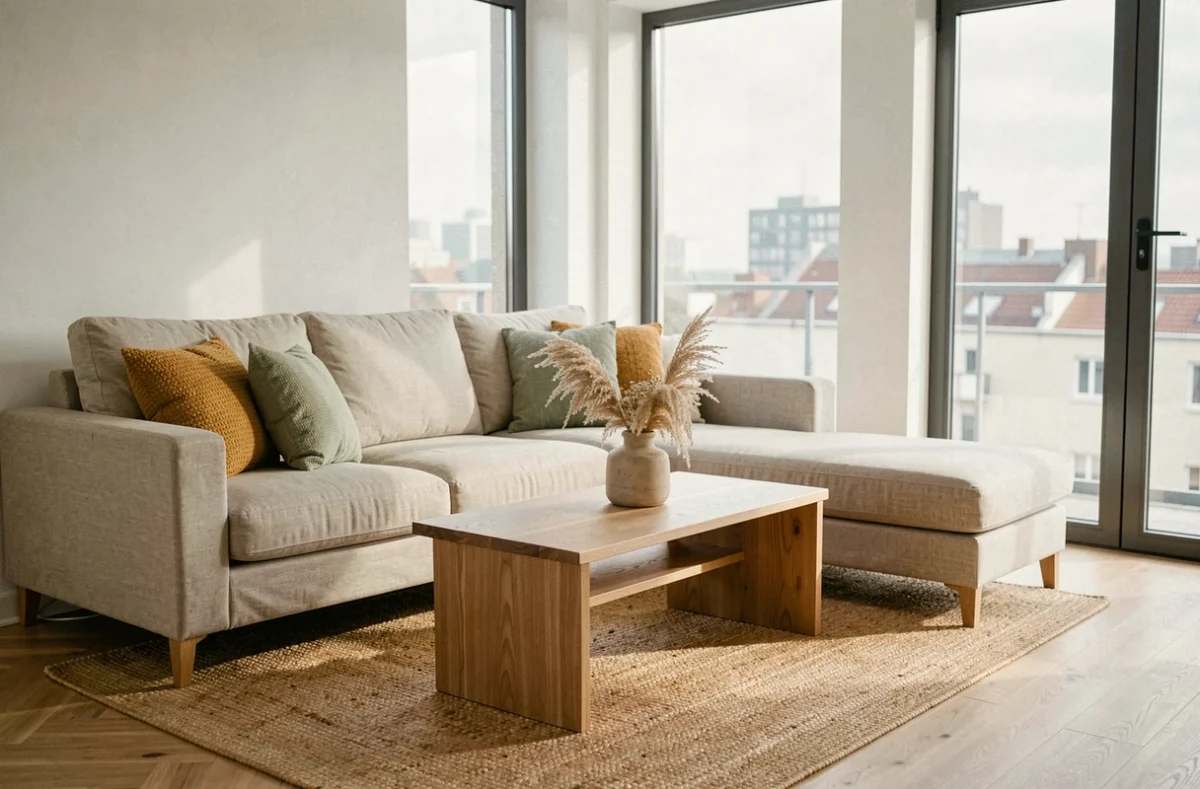
- The modularity of the seating: a sofa with removable covers and a dismountable structure adapts to various room configurations over the years
- The textile compatibility with long-term maintenance: raw linen, boucle wool, and thick cotton resist cleaning cycles better than low-cost coated fabrics
Rattan, omnipresent for several seasons, continues to attract as long as the quality of the weaving is verified. A solid rattan chair with a steel frame will last a decade, while a model made of woven synthetic fiber will lose its tension in two or three years.
2024 color palette: neutral tones, earthy accents, and pitfalls to avoid
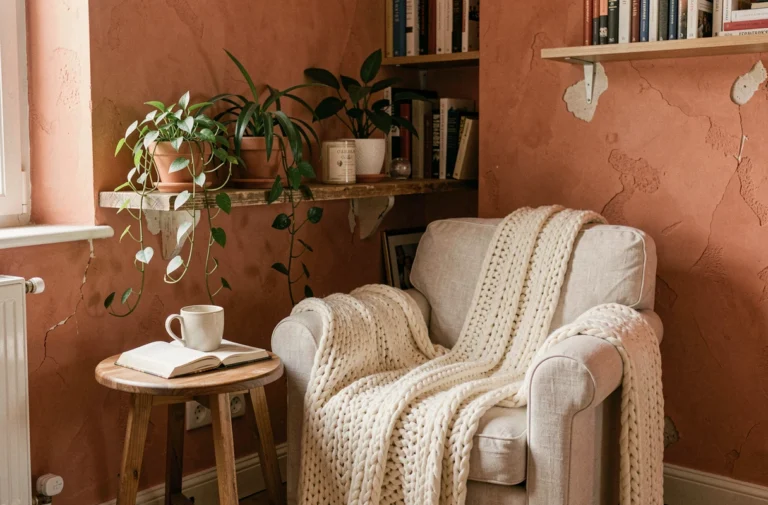
Earthy shades (terracotta, ochre, sandy beige) and sage green form the chromatic foundation of the year. Neutral tones visually enlarge the space in modest interiors, while more saturated colors like chocolate brown work well in generous volumes.
A common pitfall is treating these palettes as uniform flat colors. A terracotta wall without material breaks creates a flat effect that ages poorly. We recommend pairing color with texture: troweled plaster, lime wash, wood slat panels. Visual depth comes from relief, not just from the hue alone.
Vibrant accents: dosage and placement
Electric blue and mustard yellow appear as occasional accents. Their role is to break the neutrality without compromising it. A vibrant accent works as an isolated object, not through accumulation: a chair, a light fixture, a rug. Beyond two strong pieces in the same room, the effect tips towards overload.
Light and layout: optimizing comfort without heavy renovation
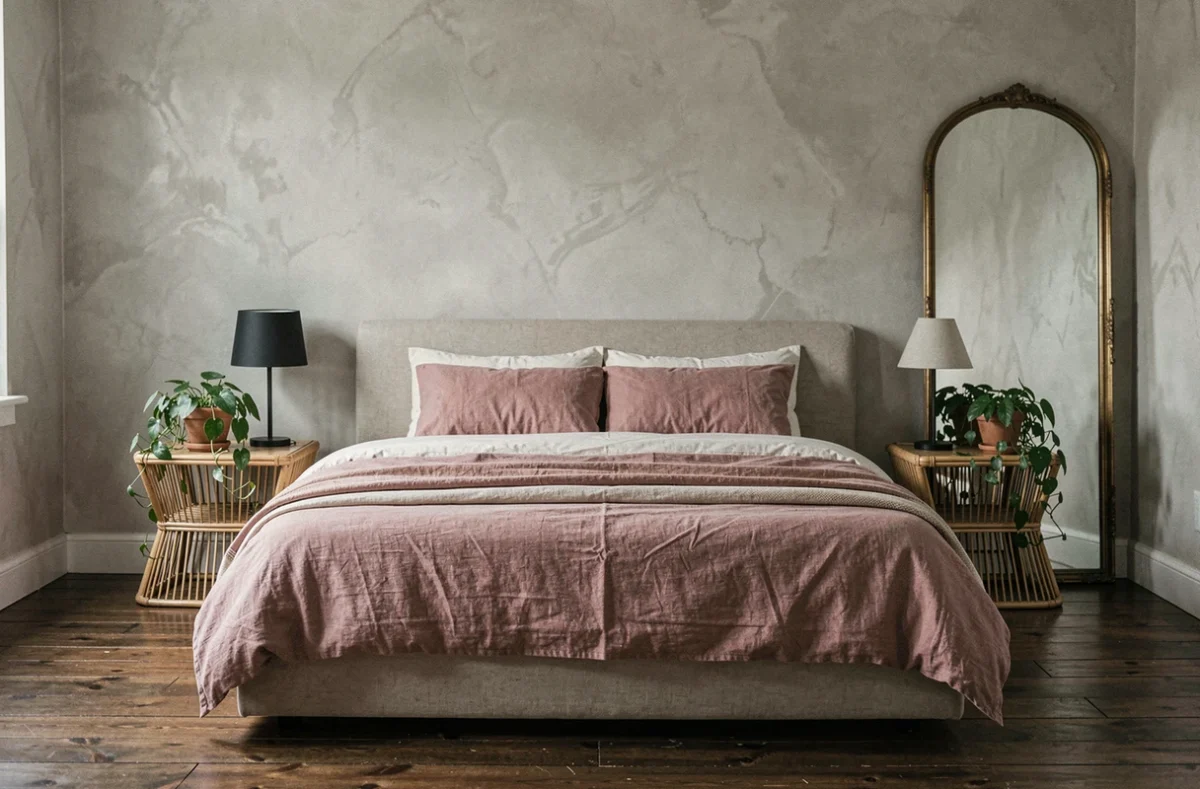
Light remains the most underestimated lever for transformation. Before repainting or refurnishing, working on lighting radically changes the ambiance of a room. The 2024 trend favors multiple, low sources rather than a central ceiling fixture.
- Table lamps with shades made of natural materials (linen, raffia) for diffuse and warm light
- Adjustable wall sconces that replace recessed spots while freeing up floor space
- Warm temperature LED strips, hidden under low furniture or behind shelves, for indirect lighting
Multiplying light points at seating height creates an enveloping atmosphere that a ceiling fixture alone cannot produce. This principle applies to the living room as well as to the bedroom or bathroom.
The layout follows the same logic of modularity. Furniture on wheels, removable partitions, and stackable storage allow reconfiguring a space without structural intervention. In a context where renovation is expensive, the flexibility of furniture replaces construction work.
Functional minimalism and curves: the formal grammar taking hold
The minimalism of 2024 does not equate to austerity. Clean lines coexist with soft curves on furniture (arches, vaults, rounded seats) that soften volumes. This formal vocabulary works particularly well in small spaces, where every centimeter counts.
The key lies in selection rather than accumulation. Three well-chosen pieces, with coherence in material and proportion, produce a more refined result than a dozen disparate accessories. This principle directly aligns with the logic of functional investment: fewer pieces, better chosen, kept longer.
The interior that ages well in 2024 is one that has been conceived as a coherent system of durable materials, controlled light, and modular furniture, rather than as a showcase of micro-trends to be renewed each season.