
Shopping online this season is not just about filling a cart and confirming an order. With collections being renewed at a rapid pace, second-hand platforms booming, and varying return policies from one site to another, each purchase requires a minimum of strategy. Here’s how to turn your online shopping sessions into truly smart decisions, without sacrificing style.
Return Policy and Legal Guarantee: What Product Descriptions Don’t Always Mention
Have you ever ordered an item that looked perfect on screen, only to find upon receipt that the fit or material was completely off? The classic reflex is to return the item. However, the cost of this return varies greatly depending on the sellers.
In the European Union, the right of withdrawal lasts for 14 days after receipt. You can change your mind without justification. However, return shipping costs are your responsibility if the seller informed you of this before the order. If this mention is absent from the general conditions, the seller pays.
This nuance deserves attention: for a defective product or one that does not conform to the description, the costs of bringing it into conformity (return, exchange, repair) are the seller’s responsibility. In practice, before clicking “buy,” scroll down to the return conditions. A site that hides them or phrases them ambiguously deserves skepticism.
For slightly more expensive fashion purchases (coats, brand shoes), the legal guarantee of conformity can prove to be more protective than a simple change-of-mind return. The legal guarantee covers defects that you would not have accepted at the time of purchase, and its duration far exceeds the 14 days of withdrawal.

Trendy Online Shopping: Spotting the Right Pieces Without Drowning
Seasonal fashion trends circulate everywhere, from social media to brand newsletters. The trap is accumulating “seen everywhere” pieces that end up at the back of the closet. A more effective approach is to target two or three trends that are compatible with what you already wear.
Before adding a garment to your cart, ask yourself a simple question: how many existing outfits does this piece work with? If the answer is “at least three,” the purchase is justified. If it’s “only one, maybe,” it’s better to pass. This rule prevents impulsive spending far better than any promo code.
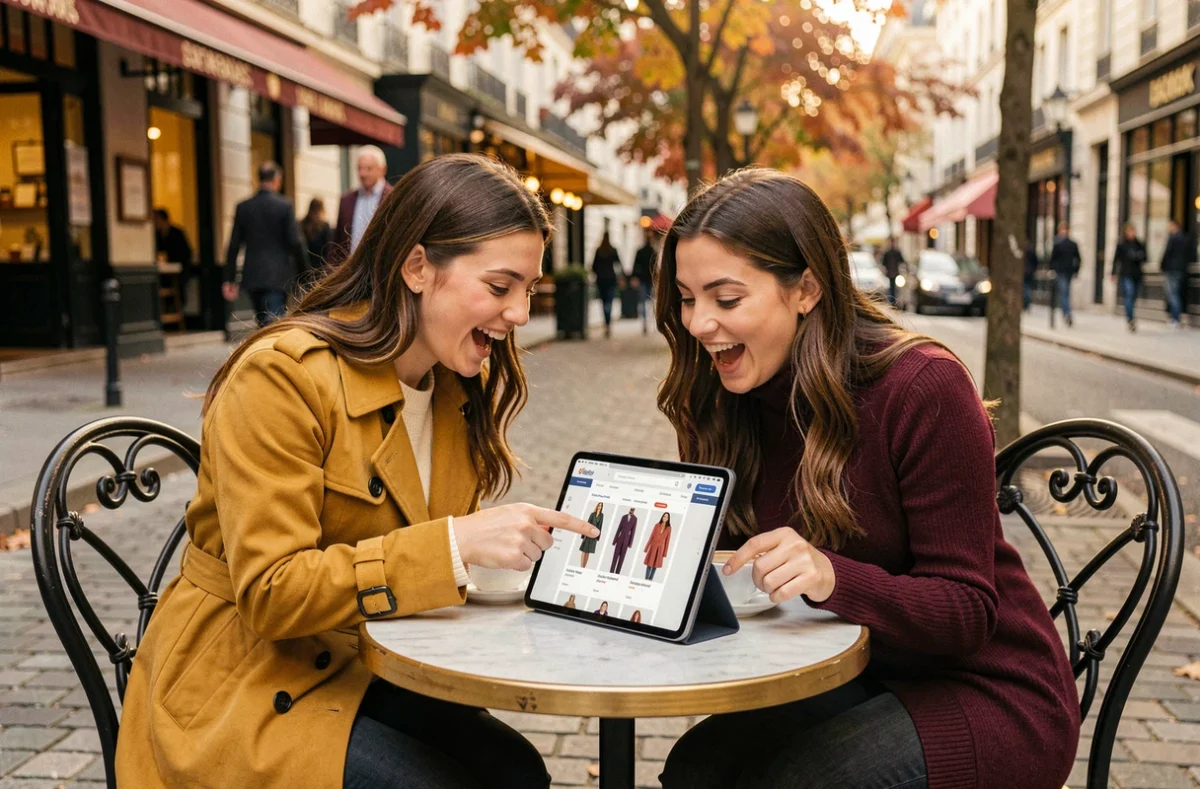
When it comes to selection, you can shop on My Fashion Mag to find pieces categorized by style and season, which makes sorting easier when you already know what you’re looking for.
- Read the fabric composition first: a high percentage of synthetic fibers on an item sold as “premium” is a warning sign regarding the quality-price ratio.
- Check customer reviews by filtering for body types similar to yours. A detailed comment on fit is worth more than an overall rating.
- Compare the same product across multiple platforms. The price of an identical item can vary significantly from one site to another, especially during sales or private sales.
Second-Hand Online: A Good Idea Under Certain Conditions
Sales of second-hand clothing are growing faster than those of new items. According to TF1 Info (September 2026), second-hand still only represents 7.2% of textile and shoe consumption. The market remains marginal in volume, but it is attracting more and more buyers looking for low prices and pieces that can’t be found in stores.
The often-cited ecological argument deserves nuance. A study by Oxfam France published in September 2026 indicates that purchasing on certain online resale platforms can generate up to five times more CO₂ emissions than buying in a solidarity shop, mainly due to packaging and individualized transport.
If the environmental aspect matters to you, consider checking if there are recycling centers, consignment shops, or thrift stores near you. Physical circuits remain the least emitting channels for second-hand, according to data shared by Refashion.
When Online Second-Hand Remains Relevant
For pieces from specific brands or hard-to-find sizes locally, resale platforms have a clear advantage: access to a much larger catalog. The trick is to group your purchases with the same seller to limit separate shipments and to favor sellers who provide detailed photos (stitching, labels, wear).
Sales and Private Sales: The Trap of the False Good Price
Is buying during sales smart by definition? Not always. A crossed-out price is only valuable if the reference price was actually practiced before the promotion. Some sites inflate displayed prices a few weeks before a commercial operation to create the illusion of a significant discount.
To verify, a simple method exists: note the price of an item you’re interested in a few weeks before the sales. Browser extensions also allow you to track price history on major platforms. If the “before discount” price has never been applied, the promotion is cosmetic.
- During sales, target pieces identified in advance rather than browsing randomly. Free navigation encourages impulsive purchases.
- Brand private sales sometimes offer better discounts than official sales, but with very short shopping windows. Sign up for alerts from brands you actually wear.
- Beware of shipping costs that negate the discount. An item on sale for less than ten euros but delivered for eight euros is not a good deal.
A final reflex to keep in mind: the piece you like moderately at a reduced price will not become a favorite once in your wardrobe. A smart purchase is primarily a purchase worn, whether it’s a second-hand find, a seasonal piece on sale, or a basic bought at full price.