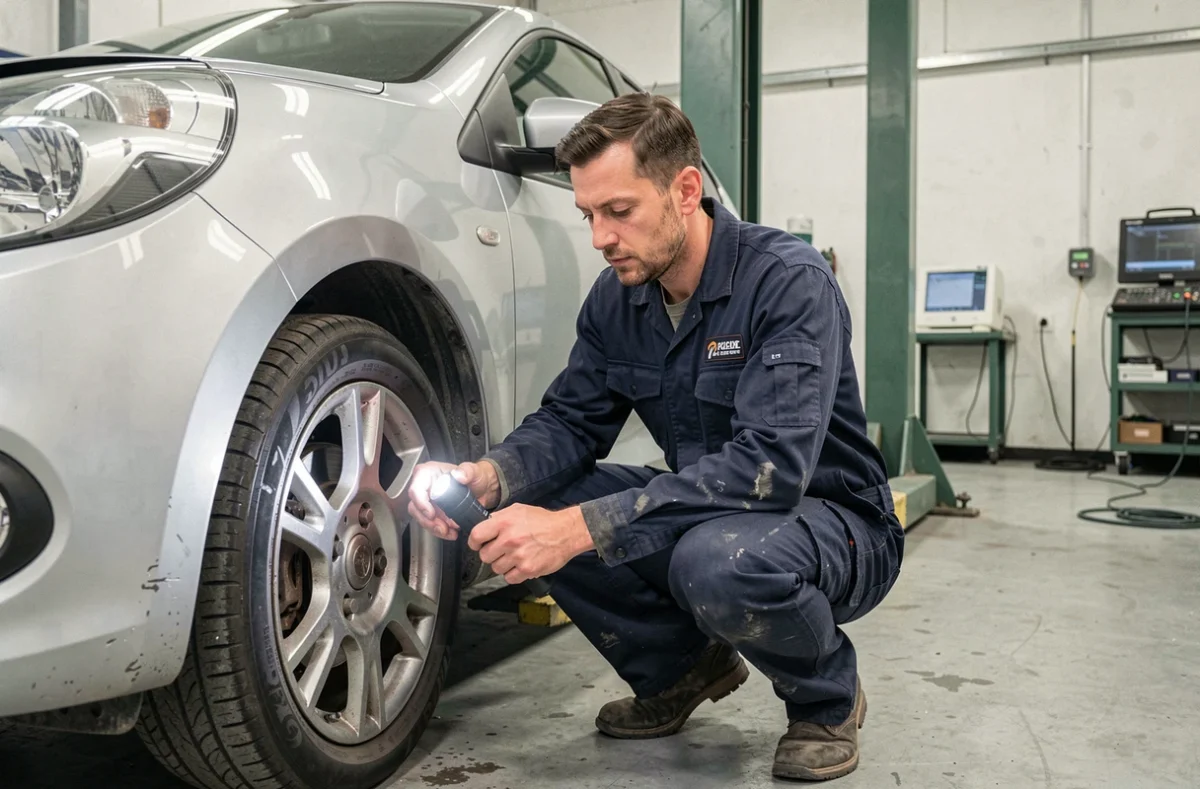
Your car is over four years old and the date for the technical inspection is approaching. Before making an appointment at a center in Belgium, a few simple checks can make the difference between a green certificate and an expensive re-inspection. The Belgian technical inspection covers several hundred points, but the reasons for refusal often focus on the same issues.
Flemish Reform of Technical Inspection: What Changes for All Belgians
Since September 1, 2026, Flanders has modified its rules. Passenger cars over four years old can now obtain a technical inspection certificate valid for two years instead of one year. The deadline for repairs after a red card has been extended to two months, compared to fifteen days previously.
Brussels and Wallonia maintain the annual schedule. This difference has created a phenomenon that the Belgian press has dubbed “technical inspection tourism.”
The certificate issued in Flanders is recognized throughout the country. A Walloon or Brussels driver can therefore have their vehicle inspected at a Flemish center and benefit from the two-year validity. On auto-test.be, you will find available centers and their slots to schedule your visit.
Note: the concrete recognition of this extended validity for a vehicle registered outside Flanders is still subject to clarification requests. Check the accepted duration according to your registration location before choosing a Flemish center.
Removal of Used Car Inspection in Flanders
Another notable change: Flanders plans to eliminate the used car inspection for vehicles already registered in Belgium and sold to a buyer residing in Flanders. The Car-Pass remains mandatory. Imported vehicles will still need to undergo an inspection.
In Wallonia and Brussels, the used car inspection remains required for any resale.
Inspection Points That Most Often Lead to Re-inspections
You may have noticed that a slightly misaligned headlight or a somewhat worn tire doesn’t hinder daily driving? At the inspection center, these details can lead to a refusal. Here are the issues that most often cause problems.
- Faulty Lighting: a burnt-out bulb, a cracked taillight, or misaligned headlights are the primary causes of re-inspection. Test each light (position, low beam, high beam, turn signals, reverse, brake) the day before the appointment.
- Tire Wear: the minimum legal tread depth must be respected across the entire tread. Tires of different brands or sizes on the same axle can also be problematic.
- Unbalanced Braking: a vehicle that pulls to one side when braking will be flagged. This imbalance is not always perceptible during normal driving, but the rollers at the center will detect it.
- Fluid Levels: brake fluid, engine oil, coolant. A level that is too low is a reason for remark, or even refusal if the relevant system is safety-related.
- Chassis Condition and Corrosion: points of perforating rust on the frame or seatbelt attachments lead to an immediate refusal.
Correcting these points before the inspection usually costs less than a re-inspection followed by emergency repairs.
Preparing Your Car the Week Before the Technical Inspection
Instead of a last-minute checklist, spread the checks over a few days. Start with the exterior, then move on to the mechanics.
Visual Checks in Five Minutes
Walk around the vehicle with the engine off. Look at each light: a reverse light that doesn’t turn on, a missing reflector. Check that the license plates are readable and properly attached. Inspect the windshield: a crack in the driver’s line of sight will lead to a refusal.
Open the hood. Visually check the levels (oil, brake fluid, coolant). Look for any leaks on the engine or power steering.
Dynamic Tests to Do Yourself
Start the vehicle and ask someone to check each light while you operate the controls. Test the horn. Drive a few meters and brake firmly on a straight line: the car should remain stable.
Check the play in the steering wheel, engine running and wheels straight. Excessive play indicates wear in the ball joints or rack. The handbrake should hold the vehicle on a slight incline without pulling the lever all the way.
Emissions Control and Particulate Filter: The Diesel Trap
Diesel vehicles are subject to a measurement of exhaust gas opacity. A clogged or removed particulate filter causes exceedance of the allowed thresholds.
Why does this point deserve special attention? Because a removed particulate filter (an illegal but widespread practice in the used car market) leads to an outright refusal. Regularly driving on the highway helps to naturally regenerate the filter. If your vehicle mainly drives in the city, take a thirty-minute trip at high revs a few days before the inspection.
Gasoline vehicles equipped with a catalytic converter are also inspected, but the refusal rates for this point remain lower.
Choosing Your Inspection Center: Flanders, Wallonia, or Brussels
The choice of Region is significant since the reform of September 2026. Three concrete criteria can guide your decision.
- Validity of the certificate: two years in Flanders, one year in Wallonia and Brussels (subject to clarification for vehicles registered outside Flanders).
- Re-inspection deadline: two months in Flanders, fifteen days in Wallonia and Brussels. This longer deadline allows more time to find a mechanic or order a part.
- Language: reports are written in the language of the Region. A report in Dutch can complicate reading if you are not proficient in the language.
The certificate is valid throughout Belgium, regardless of the Region in which it was issued. The vehicle’s registration location does not require visiting a center in that same Region.
The next deadline for your inspection is on the sticker affixed to your windshield and on the previous certificate. Making an appointment a few weeks in advance avoids saturated slots, especially at the beginning of the month. A well-prepared vehicle rarely spends more than half an hour on the inspection line.